Medication adherence is critical for effective mental health treatment, yet 40–60% of patients in the U.S. struggle to follow their prescribed plans. This leads to worsened conditions, hospitalizations, and billions in healthcare costs annually. Improving adherence requires targeted strategies that address common challenges like stigma, financial barriers, and complex routines.
Key solutions include:
- Patient education: Combining verbal, visual, and written materials helps clarify treatment plans.
- Team-based care: Collaborative models improve access and outcomes, reducing time to remission.
- Behavioral incentives: Financial rewards have shown measurable improvements in adherence rates.
- Personalized decision-making: Involving patients in their care builds trust and increases consistency.
Tools like digital reminders, simplified regimens, and community support programs (e.g., ARMHS) also play a role in boosting adherence. While challenges remain, these methods offer practical ways to improve mental health outcomes.
Improving Psychotropic Drug Adherence
Proven Methods for Better Medication Adherence
Addressing the challenges of medication adherence requires a mix of strategies that focus on patient education, collaborative care, behavioral incentives, and personalized decision-making. These approaches not only tackle common barriers but also enhance patient engagement and outcomes.
Multiple Forms of Patient Education
Using a variety of teaching methods can significantly improve how well patients stick to their treatment plans. By combining verbal explanations with visual aids and written materials, healthcare providers can cater to different learning styles and ensure key messages are understood. Start by identifying and correcting any misconceptions patients may have, and use clear, simple language when explaining complex medical concepts.
To confirm understanding, ask patients to describe their condition in their own words or demonstrate how to use their medications. For example, a study in India showed that when pharmacists and psychiatrists worked together – offering verbal counseling and bilingual educational leaflets – patients’ medication adherence improved by a mean of 1.67 ± 0.25 (P < 0.001), compared to 0.69 ± 0.05 (P < 0.05) with standard care. Including family members in these educational efforts provides an additional layer of support at home, reinforcing the information provided by healthcare professionals.
Team-Based Care Approaches
Collaborative care models have been shown to dramatically improve both access to treatment and patient outcomes. One study revealed a 375% increase in the number of patients treated, with 75% receiving a diagnosis and starting treatment within six months – compared to less than 25% under traditional care models. For instance, a program implemented by Blue Cross Blue Shield of Michigan reduced the average time to achieve depression remission to just 16 weeks, compared to 52 weeks with standard care.
These care models rely on a team of healthcare providers, including physicians, nurses, pharmacists, behavioral specialists, and social workers. Together, they handle everything from treatment decisions and medication reviews to mood disorder management and practical problem-solving. This comprehensive approach ensures patients receive the support they need to stay on track.
Behavioral Economics Methods
Incorporating financial incentives has proven to be an effective way to improve medication adherence, particularly for treatments like long-acting injectables. For example, a study in the UK found that offering £15 (about $19) per depot injection over 12 months led to an 11.5% increase in adherence (p = 0.003), resulting in an average adherence rate of 85%. Similarly, a Dutch study reported a 14.9% improvement (p < 0.001) with incentives of up to €30 (approximately $34) per month, and even after the incentives ended, adherence remained 6.5% higher (p = 0.047). To maintain these benefits, it’s essential to design incentive programs that are both tailored to individual needs and consistently applied.
Patient-Centered Decision Making
Engaging patients in their own care builds trust and leads to better adherence. Shared decision-making allows treatment plans to be customized to align with each patient’s unique needs and preferences. Open communication is key – it helps providers identify the specific barriers their patients face, whether they’re related to side effects, financial challenges, or logistical issues like transportation.
Practical tools such as pill organizers, smartphone reminders, or simplified medication regimens can make it easier for patients to stay consistent with their treatments. By addressing these hurdles and involving patients in the decision-making process, healthcare providers empower them to take an active role in their care. This personalized approach not only improves adherence but also supports better mental health outcomes overall.
Common Barriers to Medication Adherence and Solutions
Understanding the specific obstacles that prevent patients from sticking to their medication routines is key to finding practical solutions. These challenges often arise from a mix of factors, each requiring a targeted approach. Below, we’ll explore the main barriers and ways to address them.
Main Obstacles to Taking Medication
Several hurdles can make it hard for patients to adhere to their prescribed medication regimens. For starters, attitudes toward mental health conditions play a massive role. Issues like limited knowledge, poor understanding of their condition, fear of side effects, and the stigma surrounding mental illness contribute to about 68% of adherence challenges.
Financial concerns are another major issue. Between 20% and 30% of prescriptions go unfilled because of cost, yet patients often avoid discussing these struggles with their healthcare providers.
The complexity of treatment plans also poses significant difficulties. Studies show that every additional daily dose reduces adherence by about 10%. Managing multiple medications, sticking to complicated dosing schedules, or being unsure of how to take medicines properly can all lead to lower adherence rates.
Support systems – or the lack thereof – play a critical role as well. Nearly half of patients lack sufficient aftercare resources, leaving them to manage medications on their own without adequate family or community support. This isolation can make adherence feel overwhelming.
Interestingly, most non-adherence is intentional. Patients’ own beliefs, experiences, and knowledge often drive their decisions to skip medications. This highlights the importance of addressing their concerns directly rather than relying solely on reminders or automated solutions.
Health literacy adds another layer of complexity. About 35% of American adults have basic or below-basic health literacy, which can make something as simple as reading a medication label a challenge. Overcoming this requires better communication between patients and healthcare providers, as discussed next.
Better Communication Between Providers and Patients
Strong communication is at the heart of tackling medication adherence problems. Patients often see their healthcare providers as their most trusted source of information about their condition and treatment. When trust is established, patients are more likely to follow their treatment plans. However, a troubling statistic reveals that 83% of patients never inform their providers when they decide not to fill a prescription.
"If you don’t have a true picture of a patient’s medication-taking behavior, you may needlessly escalate their treatment, resulting in potential harm to the patient, unnecessary work for the practice and increased costs overall." – American Medical Association
Building trust starts with creating a welcoming and supportive environment. Providers can make a big impact by being fully present during consultations and using positive, encouraging language. Asking open-ended questions helps uncover patients’ concerns, making it easier to address their specific challenges.
One effective method is the ask-tell-ask approach. This involves asking patients what they currently understand, explaining information in simple terms, and then checking to ensure they’ve understood. Shared decision-making is another powerful tool – when patients feel involved in their care, they’re more likely to take ownership of it.
Practical steps also go a long way. Clear, straightforward instructions – both written and verbal – on how to take medications can make a huge difference. Providers can also explore online resources to compare drug prices and suggest affordable generic alternatives when possible. Engaging other healthcare team members, such as nurses, pharmacists, or peer specialists, can reinforce these messages and provide additional education.
Organizations like Metro Care Partners, which offers Adult Rehabilitative Mental Health Services (ARMHS) in Minnesota, exemplify how personalized care and strong communication can break down adherence barriers. Through services like individualized treatment plans, certified peer support, and consistent medication education, they provide patients with the tools and guidance they need to manage their treatment effectively, aligning with the behavioral and educational strategies discussed earlier.
sbb-itb-986d218
How Mental Health Providers Can Apply These Methods
Mental health providers can turn evidence-based strategies into practical tools by implementing community-focused interventions that address patients’ needs in a comprehensive way.
Using ARMHS Services
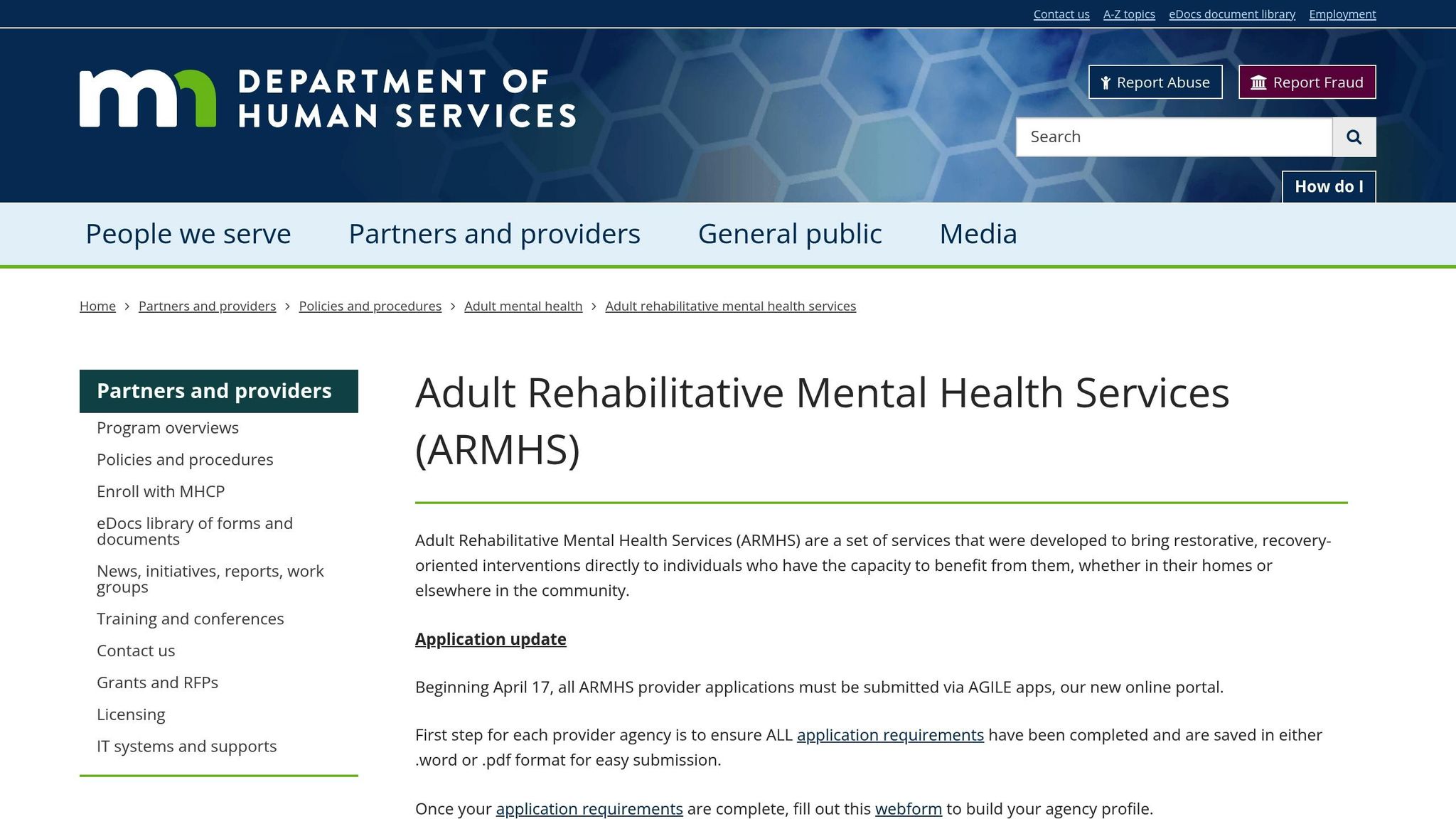
Adult Rehabilitative Mental Health Services (ARMHS) provide a flexible, community-based framework designed to promote psychiatric stability, social skills, and independent living for adults managing serious mental health conditions. These services are tailored for adults aged 18 and older who face significant challenges in daily functioning due to their mental health diagnoses.
One standout feature of ARMHS is its medication education component. Here, qualified professionals – such as physicians, pharmacists, nurses, or physician assistants – offer patients clear guidance on their mental illness, symptoms, the role of medications, potential benefits, and possible side effects. This education helps bridge the knowledge gaps that often lead to medication non-adherence.
A great example of ARMHS in action is Metro Care Partners. Their approach combines individualized care with structured interventions, including basic living and social skills training alongside medication monitoring. By weaving medication adherence into broader skill-building efforts, they ensure it becomes a natural part of the patient’s routine rather than an isolated task.
ARMHS also emphasizes reducing barriers to community integration and independent living. These services can lower the risk of hospitalization and build patients’ confidence in maintaining treatment routines. The process naturally incorporates personalized assessments and planning, making the care highly adaptive to individual needs.
Creating Individual Assessment and Treatment Plans
ARMHS services can be further enhanced by developing individualized treatment plans (ITPs) that address specific challenges, including medication adherence. These plans begin with a comprehensive biopsychosocial assessment that examines the patient’s mental health status, strengths, support systems, readiness for change, and social and cultural context. This thorough evaluation helps identify the root causes of symptoms and guides goal-setting.
A strong therapeutic alliance is essential to this process. As Jonathan Keigher, PhD, Vice President and Chief Clinical and Compliance Officer at New York Psychotherapy and Counseling Center, puts it:
"Medication compliance is a shared responsibility between individuals, the treatment team, and support networks. By implementing these strategies and fostering a collaborative approach, it is possible to improve medication adherence and enhance the treatment outcomes of people with serious mental illness."
Involving patients in setting goals is key to creating effective treatment plans. Goals should feel achievable and meaningful to the patient, increasing their commitment to the plan. For example, an ITP could include specific, measurable objectives like "Patient will take prescribed medication as directed 90% of the time over the next 30 days" or "Patient will report any medication side effects to their provider within 48 hours."
Practical barriers to adherence should also be addressed. Simplifying medication routines, using tools like pill organizers or smartphone apps, and involving family members (with the patient’s consent) can make a big difference. For patients who struggle with daily adherence, switching to Long-Acting Injectable (LAI) medications may provide a more manageable option.
Teaching About Medications and Community Support
Medication education should not only explain the benefits and side effects but also help patients set realistic expectations about their treatment timeline. Methods like psychoeducation, motivational interviewing, and cognitive behavioral therapy can be used to reinforce adherence. Addressing concerns about side effects is particularly important to ensure patients feel supported and informed.
Family and caregiver involvement often improves outcomes. When loved ones understand the patient’s condition and treatment plan, they can offer practical help – like transportation to appointments or medication reminders – and emotional encouragement. Studies consistently show that patients with strong family support are more likely to stick to their treatment plans.
Community support is another critical piece of the puzzle. ARMHS providers can coordinate care during transitions from higher levels of care, such as hospital discharges, to prevent lapses in treatment. These transitions are especially vulnerable times, making structured support vital.
Peer support services add a valuable layer to community care. Certified peer specialists, who have personal experience with mental health challenges, can share practical advice and encouragement based on their own recovery journeys. Their insights often resonate deeply with patients and complement clinical services.
Technology offers additional opportunities to strengthen community support. Telemedicine can connect patients in remote areas with their providers, while mobile apps and digital tools can help patients stay linked to resources and support networks. These innovations make it easier for patients to access help when and where they need it.
Key Findings for Better Medication Adherence
Recent studies shed light on strategies to improve medication adherence among mental health patients, while also highlighting ongoing challenges. Although some interventions successfully reduce depressive symptoms and improve quality of life, ensuring consistent medication use remains a tough hurdle.
Most Effective Methods
The MAPDep study explored patient-centered care and Chronic Care Model–based support, showing notable improvements in depression symptoms and mental quality of life. For instance:
- Patient-focused interventions: Reduced depression symptoms (B = −0.63; 95% CI: −0.96, −0.30; p < 0.001) and improved quality of life (B = 0.08; 95% CI: 0.004, 0.15; p = 0.039).
- Provider training: Also reduced depression symptoms (B = −0.39; 95% CI: −0.65, −0.12; p = 0.004).
However, despite these positive outcomes, neither approach led to significant improvements in antidepressant adherence rates. Essentially, while patients felt better, their consistency in taking medications didn’t follow suit.
Digital tools showed more promise. Patients using a digital monitoring system had an adherence rate of 84.3%, compared to just 21.3% in the control group – a 52.34% improvement. Even after 12 months, adherence remained higher (39.11% vs. 5.52%).
Integrated pharmacy services within community mental health centers also delivered strong results. Patients using these services adhered better to medications, had fewer hospitalizations and emergency visits, and generated cost savings – $58 per member per month, or about $700,000 annually for every 1,000 patients.
Text messaging interventions, studied across 16 randomized controlled trials with 2,742 participants, doubled the likelihood of adherence (odds ratio 2.11; p < .001) and boosted adherence rates by 17.8%.
These findings provide a solid foundation for providers to refine their approaches and better support medication adherence.
Next Steps for Mental Health Providers
While these methods improve clinical outcomes, the challenge now is sustaining and personalizing these benefits. Providers should tailor adherence strategies to individual patient needs, considering factors like personal beliefs, daily routines, and potential barriers. Proactively addressing these obstacles can prevent issues before they arise.
Building strong therapeutic relationships is equally important. Research highlights that warmth and empathy from providers are essential in addressing patient concerns and fostering trust. This connection lays the groundwork for all other adherence efforts.
Technology can play a key role in maintaining support between appointments. Tools like digital monitoring systems, text reminders, and mobile apps can reinforce adherence and provide ongoing encouragement.
Community-based programs offer another layer of support. For example, Metro Care Partners’ Adult Rehabilitative Mental Health Services (ARMHS) integrate daily living skills training, social support, and community engagement. These services help patients incorporate medication routines into their broader recovery process.
Ultimately, while perfect medication adherence remains a challenge, these comprehensive, patient-centered strategies can significantly enhance recovery and well-being. By focusing on what matters most to patients and their families, providers can make a meaningful impact.
FAQs
What are the main challenges to taking medications for mental health, and how can they be managed effectively?
Many adults encounter obstacles when it comes to sticking to their mental health medication plans. Common hurdles include stigma, side effects, forgetting doses, high costs, and a lack of understanding about their diagnosis or treatment. On top of that, limited support systems and complicated medication schedules can make the situation even tougher.
There are ways to tackle these issues. Developing personalized care plans, offering education about medications, and involving family or support networks can play a huge role in improving adherence. Simplifying medication routines, providing financial assistance, and encouraging open communication between patients and healthcare providers are also effective approaches. For those who need extra help, programs like Adult Rehabilitative Mental Health Services (ARMHS) offer support to help individuals build skills and confidence, aiding in their recovery and integration into the community.
How can financial incentives enhance medication adherence, and what are their potential long-term impacts on patient behavior?
Financial incentives have the potential to play a big role in improving medication adherence by motivating patients to stick with their treatment plans. Studies have shown that adherence rates can see a substantial boost, with some research highlighting improvements as high as 95%. These incentives serve as an extra push, helping patients give their mental health the attention it deserves.
When used effectively, financial incentives can contribute to long-term treatment engagement and better mental health outcomes. However, their impact may taper off over time if not carefully managed. There’s also the possibility that relying too heavily on external rewards could weaken a patient’s internal drive to stay committed to their treatment. To ensure they’re effective, these incentives need to be thoughtfully crafted to encourage meaningful, lasting changes that align with recovery goals.
How can technology like digital reminders and mobile apps help improve medication adherence for adults with mental health challenges?
Technology, including digital reminders and mobile apps, can make a big difference in helping people with mental health challenges stick to their medication routines. These tools often come with helpful features like real-time alerts to remind users to take their medication, tracking systems to keep tabs on progress, and educational resources that explain treatment plans in more detail.
By offering steady support and encouraging accountability, these technologies help individuals follow their prescribed treatments more effectively, contributing to improved mental health and recovery.