ARMHS (Adult Rehabilitative Mental Health Services) helps individuals develop skills for shopping, running errands, and managing daily tasks independently. The program provides hands-on training in real-world settings, focusing on planning, budgeting, time management, and transportation.
Key Takeaways:
- Skill Development: Learn to create shopping lists, manage budgets, and handle errands step by step.
- Transportation Guidance: Understand public transit, alternative options, and safety practices.
- Focus on Independence: ARMHS teaches "do with, not do for", empowering clients to handle tasks on their own.
- Personalized Plans: Individual Treatment Plans (ITPs) address each person’s goals and progress.
While ARMHS builds confidence and problem-solving abilities, it doesn’t provide direct services like shopping for clients or offering transportation. Instead, it equips participants with tools to manage these tasks independently, supporting long-term recovery and community integration.
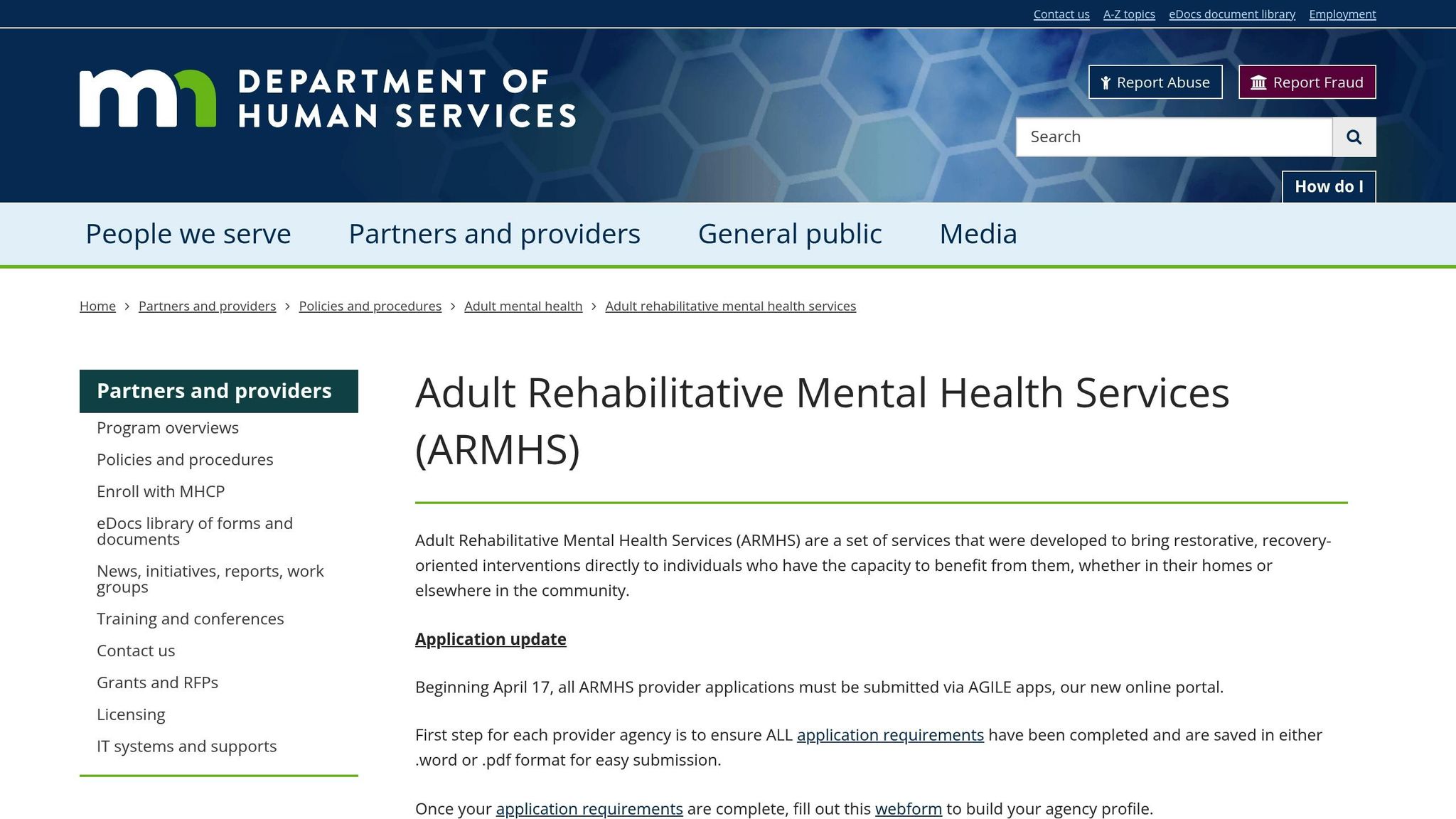
ARMHS Information and Definition of Services
How ARMHS Builds Shopping and Errand Skills
ARMHS focuses on helping clients gain the confidence and ability to handle shopping and errands on their own. By teaching these skills step by step, the program lays the groundwork for greater independence and success in everyday community living. Here’s how this process unfolds.
The learning happens gradually, with ARMHS practitioners guiding clients in real-world settings. This hands-on approach ensures that clients practice skills in the actual environments where they’ll use them, making the experience more practical and impactful.
Learning Basic Shopping and Errand Skills
The journey begins with mastering the essentials of shopping and running errands. Practitioners start by teaching planning and preparation. Clients learn how to create detailed shopping lists, group items into categories, and estimate how long tasks will take. This step helps reduce stress and makes each trip more organized.
Another key focus is budget management. Clients are taught how to set spending limits, compare prices, and use apps for tracking expenses. They also practice handling money, understanding sales tax, using different payment methods, and keeping receipts for their records.
Navigation plays a big role, too. Clients practice finding items in stores, asking employees for help, and figuring out store layouts. They also learn how to handle unexpected scenarios, like items being out of stock or needing to return a purchase.
Beyond shopping, the program emphasizes problem-solving skills for other errands. This includes gathering necessary documents for appointments, identifying what’s needed for different locations, and effectively communicating with service providers like bank staff, pharmacists, or government workers.
Once these basics are in place, clients move on to managing their time and priorities more effectively.
Time Management and Setting Priorities
Time management is a game-changer when it comes to errands. Practitioners help clients develop realistic schedules that account for potential delays. They learn to include buffer time and understand how factors like traffic or weather might affect their plans.
Priority-setting skills are also essential. Clients are taught how to decide which tasks need immediate attention and which can wait. For example, they learn to recognize which errands have strict deadlines or limited operating hours, helping them avoid last-minute stress.
To further streamline their efforts, clients practice grouping related errands. This means planning routes that reduce travel time and combining trips to nearby locations. This is especially helpful for those who rely on public transportation or have limited mobility.
ARMHS also addresses common challenges like underestimating how long tasks will take or feeling overwhelmed by multiple responsibilities. Practitioners work with clients to create contingency plans and adjust schedules as needed, ensuring they stay on track.
Getting Around Your Community
Transportation is a big part of running errands, and ARMHS provides thorough guidance in this area. Clients learn to navigate public transportation systems, including reading bus schedules, planning multi-step routes, and handling transfers. Practitioners often accompany clients on buses or trains until they feel confident traveling on their own.
For those who don’t use public transit, ARMHS explores alternative transportation options. This might include using ride-sharing apps, coordinating with friends or family for rides, or accessing community transportation services designed for people with disabilities or mobility challenges.
Safety and navigation skills are a top priority during this training. Clients learn to stay aware of their surroundings, carry emergency contact information, and handle situations like getting lost or confused. Practitioners help them identify reliable landmarks and create backup plans for getting home safely.
Transportation challenges can be a major hurdle to independence, so ARMHS helps clients prepare for unexpected scenarios. They develop contingency plans for situations like missing a bus, bad weather, or service disruptions, ensuring they can adapt and maintain their independence.
Finally, clients practice communicating their needs while traveling. This includes asking for directions, requesting help when needed, and advocating for themselves in situations where they might face misunderstanding or discrimination related to their mental health. These skills empower clients to navigate their community with confidence.
What ARMHS Can and Cannot Do for Shopping and Errands
Once clients have developed basic shopping and errand skills, it’s important to understand the scope of ARMHS (Adult Rehabilitative Mental Health Services) support. Setting realistic expectations is key, as ARMHS operates within clear boundaries. The program emphasizes a "do with, not do for" philosophy, meaning practitioners focus on guiding, teaching, and encouraging rather than completing tasks for clients.
Benefits of ARMHS Support
ARMHS support goes beyond just assisting with individual shopping trips or errands – it’s about creating lasting skills that lead to greater independence. Clients build confidence to handle unexpected situations, make thoughtful decisions, and navigate community resources on their own.
One of the standout benefits is the improvement of problem-solving skills. By actively participating in real-life scenarios, clients learn to evaluate challenges, consider their options, and adjust when plans change. This hands-on approach strengthens their ability to manage daily tasks independently and with confidence.
While ARMHS is a valuable resource for fostering independence, it’s equally important to understand what the program does not cover.
What ARMHS Does Not Provide
- Household tasks: ARMHS does not handle tasks like grocery shopping for clients.
- Transportation services: While ARMHS teaches clients how to use transportation options, it doesn’t provide transit services directly. Instead, the focus is on helping individuals connect with resources and learn how to access and use them.
- Task completion: ARMHS is strictly about rehabilitation and skill-building. The program is designed to empower clients to take charge of daily tasks themselves rather than relying on others to do it for them .
sbb-itb-986d218
Adding Shopping and Errand Skills to Recovery Plans
ARMHS includes shopping and errand skills as part of its focus on Basic Living and Social Skills, which are crucial for independent living. These skills are woven into a structured, client-focused recovery plan.
At the heart of this approach is the Individual Treatment Plan (ITP), a written document that outlines treatment strategies, goals, and responsibilities. The ITP is developed collaboratively, involving the client, their family, caregivers, and the ARMHS provider team. This ensures that the recovery plan is tailored to the individual’s unique needs and goals.
Setting Goals and Tracking Progress
The ITP incorporates shopping and errand skills with specific, measurable goals, such as budgeting and effective shopping practices. Strategies like demonstrations, role modeling, and hands-on practice are detailed in the plan to help clients build these skills. Progress is regularly reviewed and documented, allowing the plan to adapt to the client’s changing needs.
Personalized Support by Metro Care Partners
Metro Care Partners takes this a step further with its Client-Centered Care approach, empowering clients to take an active role in their recovery. The process starts with Functional Assessments that evaluate how mental health symptoms affect each individual’s daily life. These assessments form the foundation of a customized ITP. For some, the focus might be on budgeting, while others may need help with transportation or managing anxiety in busy stores.
The ARMHS staff at Metro Care Partners provide hands-on services aimed at teaching essential skills, with a strong emphasis on daily living activities like shopping and errands. Their targeted instruction helps clients work toward self-sufficiency and recovery.
Ali M., an ARMHS participant, described their experience:
"The tailored support and genuine care from the mental health professionals have empowered me to develop essential skills and regain control over my life."
This individualized approach ensures that shopping and errand skills become key components of recovery plans, helping clients achieve greater independence and integrate more fully into their communities.
Building Independence Through ARMHS
The goal of ARMHS (Adult Rehabilitative Mental Health Services) shopping and errand support is to guide individuals toward becoming self-reliant in their daily routines. Achieving this level of independence takes time and patience, as it’s nurtured through skill-building and gradually taking on more responsibilities.
ARMHS providers work with clients step by step, starting with simpler tasks like creating shopping lists. Over time, they introduce more complex challenges, such as managing a budget or planning multi-stop errands. These skills are practiced in real-life settings – grocery stores, pharmacies, and other community spaces – allowing clients to build confidence and familiarity with the environments they’ll navigate on their own.
As clients grow more comfortable with practical tasks, connecting with their community becomes the next step. Community involvement is a key element of fostering independence. ARMHS services help clients form relationships with local businesses, explore available resources, and become more acquainted with their neighborhoods. This connection to the community becomes a cornerstone for living independently.
Metro Care Partners incorporates these principles into their ARMHS services, especially when helping clients transition to community living. They understand that independence isn’t one-size-fits-all. For some, it may mean complete self-sufficiency, while others might still need targeted support in specific areas, even as they handle most tasks on their own.
A functional assessment is a critical part of the process. This evaluation helps establish realistic goals for independence, identifying which shopping and errand skills a client can master and where they might need continued assistance or adapted approaches.
FAQs
How is ARMHS support different from services like shopping or transportation assistance?
ARMHS, or Adult Rehabilitative Mental Health Services, is designed to help individuals develop important life skills and access community resources. Instead of offering direct assistance like driving someone to appointments or helping with errands, ARMHS practitioners focus on teaching skills such as budgeting, planning, and navigating community systems. The goal is to equip clients with the tools they need to handle daily tasks on their own.
On the other hand, direct services provide hands-on help, like accompanying someone to the store or offering transportation. While these services address immediate needs, ARMHS takes a different approach, aiming to build long-term independence and support mental health recovery through skill-building and tailored guidance.
How does ARMHS help clients manage their time and prioritize errands effectively?
ARMHS helps clients build time management and prioritization skills by crafting personalized strategies that fit their unique needs. This involves guiding them to create structured routines, set realistic goals, and break larger tasks into smaller, more manageable steps.
Clients also learn to use practical tools like to-do lists, calendars, and scheduling methods to stay on top of their responsibilities. These skills not only make daily tasks more manageable but also boost confidence and independence, enhancing their overall quality of life.
How does the ARMHS program tailor its services to fit each person’s unique needs and goals?
The ARMHS program uses a person-centered approach to create services that align with each individual’s specific needs and recovery goals. This involves helping clients develop practical skills such as effective communication, managing finances, navigating community resources, and adopting healthier lifestyle habits.
By prioritizing what’s most important to each person, the program empowers clients to gain independence, foster stronger community ties, and make real strides in their mental health recovery.